A clear, step-by-step guide to selling your property in Auckland — from the first decision through to settlement. Written by a Barfoot & Thompson agent who has done it over 100 times.
Thinking of Selling Your Property in Auckland? Start Here.
Selling a home is one of the biggest financial decisions most of us will ever make. And if you've never done it before in Auckland, the whole thing can feel a bit overwhelming. Auctions on a Thursday morning in the city, deadline sales, LIM reports, vendor's agents, conditional offers — it's a lot of language to absorb at once.
I've helped over 100 Auckland families sell their properties at Barfoot & Thompson, and I've noticed something. The vendors who feel calm and in control are the ones who understand the journey before they start. The ones who feel anxious are the ones who jumped in without a map.
So this is the map.
If you're thinking about selling your property in Auckland, here's everything you need to know — in plain English, in the order it actually happens.
Step 1. Be honest about why you're selling
Before anything else, get clear on this one thing: why are you selling?
The answer changes everything. Someone selling because they're moving overseas next month has a very different strategy from someone who would only sell if the right number came along. Someone with a growing family who needs to be in by the start of the school term has different priorities to a retiree downsizing without a deadline.
Your reason will shape three big decisions later on:
- How quickly you need to sell
- Which method of sale suits you (more on that below)
- What price you're willing to accept
There's no wrong answer here. But there is a wrong move, and that's pretending you have no timeline when you do, or pretending you have one when you don't. Be honest with yourself first, then with your agent.
Step 2. Understand what your property is actually worth
This is where most vendors trip up.
There are three numbers floating around for any property in Auckland, and they almost never agree:
Rateable Value (RV) — The figure Auckland Council uses to work out your rates. RVs are reassessed every three years and are usually well behind the market. Don't use the RV as your asking price.
Online estimates — Sites like OneRoof and homes.co.nz pull together public data and give you an automated guess. They're useful as a starting point, but they can't see inside your house, they don't know about your renovations, and they often miss what's happening in your specific street.
Market appraisal — This is what an experienced agent gives you after walking through your home, looking at recent sales of similar properties in your area, and assessing the current state of the market. It's the only number that actually reflects what a buyer would pay today.
A good market appraisal in Auckland should reference recent comparable sales (called "comps") from the last three to six months in your suburb, factor in your property's specific features, and account for current buyer demand. According to REINZ, the median sale price across Auckland shifts month to month, and a single REINZ release can change appraisals by tens of thousands of dollars. So if your appraisal is more than three months old, get a fresh one.
A market appraisal is free and there's no obligation. If anyone tells you otherwise, walk away.
Step 3. Choose your agent — carefully
This is the single most important decision you'll make in the whole process. The right agent doesn't just sell your property. They get you the most money for it, with the least stress, in the timeframe that works for you.
So how do you choose?
Don't pick the agent who quotes you the highest price just to win your business — that's an old trick called "buying the listing", and it usually ends in price drops, frustration, and a sale below what was promised. Don't pick the cheapest commission either. The cost of a slightly lower commission is nothing compared to the cost of selling for $50,000 less than you should have.
What you actually want is:
- A track record of recent sales in your suburb (ask to see the addresses)
- Honest, clear communication (you should never feel chased or ignored)
- A defined strategy, not just "we'll market it and see what happens"
- References from past vendors you can actually speak to
- Licensed under the Real Estate Authority (REA), which all agents in New Zealand must be
Spend an hour interviewing two or three agents before you sign anything. The difference between a good agent and an average one is often six figures.
Step 4. Choose how you'll sell
In Auckland, there are four main ways to sell a property. Each one suits a different kind of vendor, and getting this choice right is half the battle.
Auction. The most common method in Auckland, especially through Barfoot & Thompson. A 3 to 4 week marketing campaign builds competition between buyers, who then bid against each other on auction day. It works brilliantly when the market is active and there are multiple interested parties. The benefit: it forces buyers to commit to an unconditional offer. The cost: you need to be confident there will be more than one serious buyer.
Deadline Sale (also called Deadline Private Treaty). Buyers submit their best offers by a set date. There's no auction event, but there's still pressure to put a strong offer forward. Suits properties where you want competition without the public theatre of an auction.
Price by Negotiation (PBN). No fixed price, no deadline. Buyers make offers and you negotiate. This works well when the property is unusual, hard to compare, or when the market is uncertain.
Asking Price (or Buyer Enquiry Over). You name a price up front. Simple, transparent, and good for properties where the value is clear and you want to attract buyers in a specific budget bracket.
Your agent should walk you through each option and recommend one based on your property, your timeframe, and the current market — not based on what's easiest for them. There's a fuller breakdown in Auction vs Deadline Sale vs Price by Negotiation: which is right for you?
Step 5. Get the property ready
You don't need to spend $30,000 on a renovation. But you should spend a weekend (and possibly a few hundred dollars) on the things that genuinely move the needle.
Quick wins for Auckland properties:
- A deep clean inside and out
- Fresh paint where the walls are tired (neutral colours sell)
- Tidy the garden, mow the lawns, water-blast the driveway
- Declutter — buyers can't picture themselves living in your house if they're staring at your stuff
- Fix the small annoying things: dripping taps, sticky doors, blown bulbs, marks on walls
Should you stage? In Auckland, professional home staging typically costs between $2,500 and $5,000 for a 4 to 6 week campaign, and on a well-positioned property it can return many times that in the final sale price. Whether it's worth it depends on the property, the market, and your buyer pool. A good agent will give you a straight answer rather than upselling you.
For a full pre-listing checklist, have a look at 10 Things to Do Before Listing Your Auckland Property.
Step 6. Get your legal and compliance ducks in a row
Before you go to market, your solicitor will help you sort:
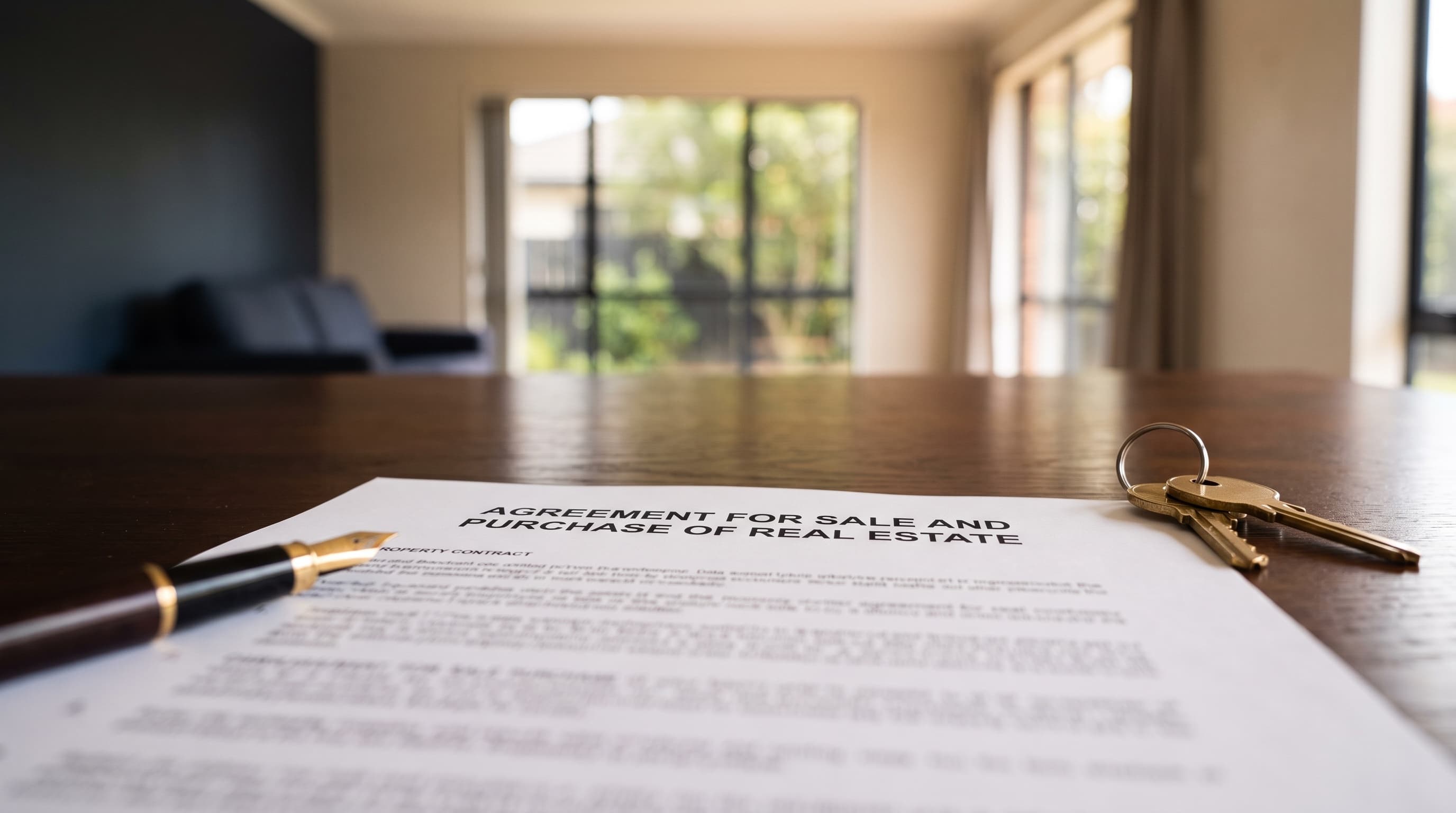
Sale and Purchase Agreement. This is the standard contract used across New Zealand, published by the ADLS and REINZ. Your solicitor will customise it for your sale.
LIM report. A Land Information Memorandum from Auckland Council. Most buyers in Auckland will request one, and it's worth getting yours sorted early so you're not surprised by anything during a campaign.
Title check. Auckland has a few different title types — Freehold, Cross-lease, Unit Title, and (rarely) Leasehold. Each has different rules and different things buyers will want to see. Cross-lease is particularly common in Auckland and can have quirks worth flagging up front.
Building consents. If anyone has done renovation work in the past, the Code Compliance Certificate (CCC) for that work needs to be in order. This is one of the most common things to delay a sale, so check it before you list.
Bright-line test. If you've owned the property for less than the bright-line period, you may owe tax on any profit. Talk to your accountant before listing, not after. The rules have changed several times in recent years, so don't rely on what you read three years ago.
Your solicitor will charge somewhere between $1,200 and $2,500 to handle the sale-side conveyancing for a typical Auckland property.
Step 7. The marketing campaign
Once you're listed, the campaign typically runs for three to four weeks (auction) or four to five weeks (deadline sale). What happens during that time:
- Professional photography and floor plans — usually paid by you up front, but worth every cent
- Listing on realestate.co.nz, Trade Me Property, OneRoof, and the agency's own site
- Print advertising — still relevant in some Auckland suburbs, less so in others
- Open homes — usually two per week (Saturday and Sunday) plus private viewings
- Buyer feedback — your agent should be reporting back to you weekly, with what buyers are actually saying
You should know after the second week roughly where you're sitting. If the feedback is strong, you're on track. If it's quiet, you and your agent need to have an honest conversation about price, marketing, or both — before auction day, not on it.
Step 8. Auction day, or offer day
This is the moment.
If it's an auction, it usually happens at a Barfoot & Thompson auction room (the main one in Auckland is in the city) on a weekday morning. Your agent will sit with you, manage bidder communication, and guide you on whether to lower the reserve in real time if needed.
If it's a deadline sale, offers come in by the deadline and you sit down with your agent to review them. You don't have to accept any of them, and you can negotiate.
If it's a private treaty negotiation, offers can come in at any time, and you work through them as they arrive.
Whatever the method, the goal is the same: end the day with an unconditional contract at a price you're happy with.
Step 9. From sold to settlement
The day the property "sells" isn't the day you actually finish.
In New Zealand, the typical settlement period is 30 to 60 days after the contract goes unconditional. During that time:
- The buyer's solicitor and yours work through the paperwork
- You pack and move out
- Final water meter readings, rates apportionments, and outstanding bills get sorted
- On settlement day, the funds transfer, the keys hand over, and the property is officially the buyer's
Your agent should still be involved during this period — answering buyer questions, helping with access, and making sure nothing falls through.
So when's the best time to start?
The honest answer: it depends.
Auckland has a fairly predictable rhythm. Spring (September to November) is traditionally the busiest period, with high buyer activity and lots of new listings. Things slow over Christmas and the first half of January, then pick up again from late February. Winter is quieter but often less competitive — fewer listings means buyers see your property more easily.
But "best time" also depends on you — your reason for selling, your finances, what's happening in the market right now, and what your specific suburb is doing. Auckland is not one market; it's dozens.
If you're thinking seriously about selling in the next 6 to 12 months, the smartest first step is a free market appraisal. It tells you what your property is worth today, what kind of buyer is in the market, and what method of sale would work best for your situation. No obligation, no pressure.
A final word
Selling a home is emotional. It's the place your kids grew up, or the first house you ever owned, or the one your parents lived in. It's also probably your single biggest asset.
You don't have to figure all of this out on your own. Pick the right agent, take it one step at a time, and the whole thing becomes a lot less daunting than it looks from the outside.
If you'd like to talk about your specific property, I'd love to help. A market appraisal takes about 30 minutes, costs nothing, and you walk away with a clear picture of where you stand — whether you decide to sell with me, with someone else, or not at all.
Book your free market appraisal →
Kellys Osorio is a licensed real estate agent at Barfoot & Thompson, Greenlane Branch. She has helped over 100 Auckland families sell their properties and has been ranked among the top salespeople in Central Auckland.

Kellys Osorio
Licensed Salesperson, Barfoot & Thompson