Developers are slashing prices on new townhouses. Here is what is really happening and how owners of established brick-and-tile units should respond.
Open any property news site this week and you will see the word "townhouse" sitting next to words like "slashed" and "kamikaze". If you own a unit or townhouse, or you are thinking of selling one, it is natural to wonder whether those headlines are about you.
The short answer is: partly. Let me walk you through what is actually happening, what it does and does not tell us, and how I would position an established unit in this market.
What Is Actually Happening
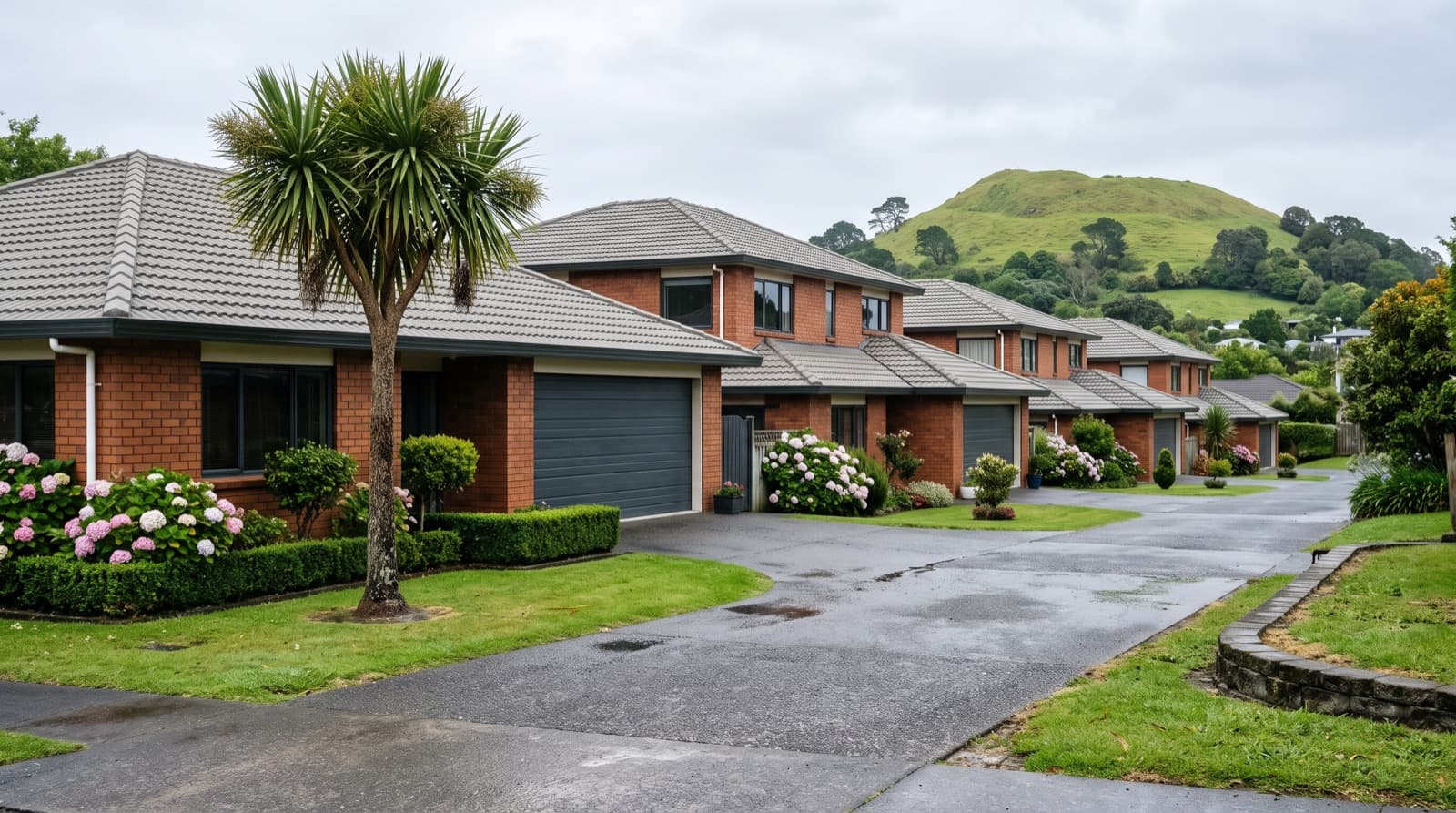
The stories behind the headlines are about new infill developments, mostly in South Auckland and Flat Bush, where supply has outrun the number of buyers.
- Developers are discounting hard. OneRoof reports that a new build on Massey Road in Māngere East sold for $625,000 at a $1 reserve auction, almost $200,000 below its asking price when it first listed in March. The developer's lender had told them to sell.
- Agents say supply has overshot. Agents interviewed by OneRoof say the number of townhouses in their areas has run well ahead of demand, and that townhouses and duplexes are the properties struggling most.
- Buyers hold the cards. Buyers are playing developers off against each other, and some are tying properties up with conditional contracts while they look at cheaper alternatives.
- The pipeline has been big. Stats NZ consent figures for the 12 months to September show 17,756 townhouses consented nationally, close to the 19,228 standalone houses.
The wider market backs that up. Barfoot & Thompson had 6,508 listings on its books at the end of October, the most in 18 years, and says buyers have an exceptionally high level of choice across all price segments. Cotality has Auckland's median value at $1,006,098, down 4.2 percent on a year ago.
What It Does Not Tell Us
It is worth being careful about reading too much into it. The examples are new-build developments sold by developers who need to move stock, and the suburbs named are further south than Mount Wellington and Ellerslie. There is no published Auckland-wide count of unsold townhouses, and the Barfoot and Cotality figures cover all homes, not just units.
But buyers do not shop by suburb boundary. A first-home buyer with a fixed budget compares what is on offer across the whole city. When new builds are being discounted, that becomes the reference point for every similar home, including yours.
Why an Established Brick-and-Tile Unit Is a Different Product
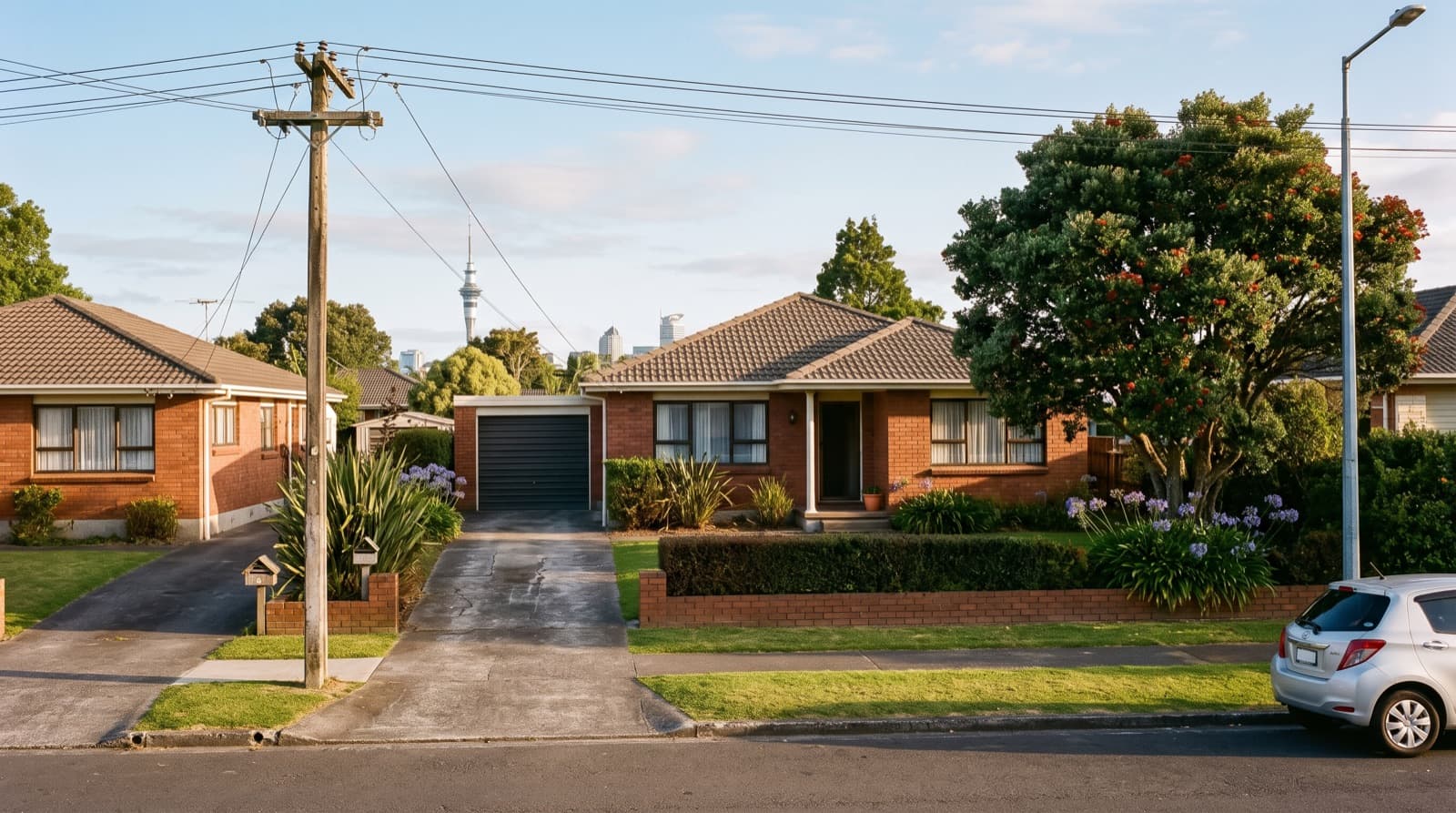
- It is finished. Mature gardens, an established street, schools and shops nearby, and no building work next door.
- Buyers can see exactly what they are getting. No promises about what it will look like, and no waiting for titles. They can inspect it, test it and get a report on it.
- It suits the buyers who are active. OneRoof notes that well-maintained brick-and-tile homes remain popular with first-home buyers, including two that an agent sold in Papatoetoe and Clendon Park for $735,000 and $745,000.
One of the agents in that article summed it up: if homes are good and done properly, they will sell. The same applies to how you bring yours to market.
How I Would Price and Present a Unit Right Now
- Price to what has sold, not what is listed. Developer asking prices are not evidence of value. Recent sales of similar homes nearby are. A free appraisal will show you exactly where yours sits.
- Expect buyers to negotiate and ask for conditions. Have your documents ready: LIM, building report and, for a unit, the title details. If yours is a cross-lease, make sure the plans match what is on the ground.
- Choose the sale method with care. Auction needs real competition. In the last week of October, 139 of the 380 Auckland auctions monitored by interest.co.nz sold, about 37 percent. A deadline sale or price by negotiation can suit better when buyers are cautious.
- Make yours the best option on the list. With this much stock, presentation decides which homes buyers shortlist. Clean lines, light, a tidy garden and good photography are what set a unit apart.
A Final Thought
The townhouse headlines are real, but they describe a problem for developers with new stock to move, not a verdict on every unit in Auckland. If you own a well-kept, established home, you are selling something a buyer can see, touch and trust.
Price it honestly, present it properly and be ready for a buyer who negotiates, and it will find its place in this market. This is general information, not financial or tax advice. If you own a unit or townhouse and would like to know where it sits today, I am happy to help. Book your free market appraisal today. →

Kellys Osorio
Licensed Salesperson, Barfoot & Thompson